In demanding applications where components must fit together with minimal clearance, where load paths depend on exact alignment, and where field modifications are not an option, precision steel fabrication is the only acceptable manufacturing approach. PCJ Steel Processing delivers precision steel fabrication that achieves tight tolerances consistently, product after product, batch after batch.
This article explains what precision steel fabrication entails, when it is essential, and how PCJ Steel Processing’s technology, processes, and quality systems deliver the accuracy that critical applications demand.
Demanding tolerances? PCJ Steel Processing delivers precision steel fabrication you can count on. Get a quote.
What Is Precision Steel Fabrication
Precision steel fabrication refers to manufacturing steel products within narrow dimensional tolerances that exceed standard fabrication accuracy. While standard fabrication might work within tolerances of several millimeters, precision fabrication targets tolerances measured in fractions of a millimeter.
Precision is achieved through a combination of advanced cutting technology, controlled welding procedures, calibrated measuring instruments, environmental controls, and systematic quality verification. Each factor contributes to the final dimensional accuracy of fabricated products.
Precision steel fabrication is not simply about tighter measurements. It represents a manufacturing philosophy where every process step is planned, controlled, and verified to ensure the finished product matches the design intent exactly.
When Precision Steel Fabrication Is Essential
Several application categories demand precision steel fabrication. Precast concrete hardware requires tight tolerances because lifting anchors, sockets, and couplers must integrate precisely into formwork and reinforcement layouts. Dimensional errors translate directly into structural risk.
MEP support systems demand precision because strut channel fittings, brackets, and clamps must match installation specifications for reliable field assembly. Components that do not fit properly create installation delays and compromise system performance.
Structural connection hardware requires precision because bolted connections depend on exact hole patterns and plate dimensions for proper load transfer. Misaligned connections can reduce structural capacity.
OEM components need precision because products manufactured to client specifications must replicate designs exactly, batch after batch, to maintain consistent performance and interchangeability.
PCJ Precision Steel Fabrication Technologies
CNC Cutting for Dimensional Precision
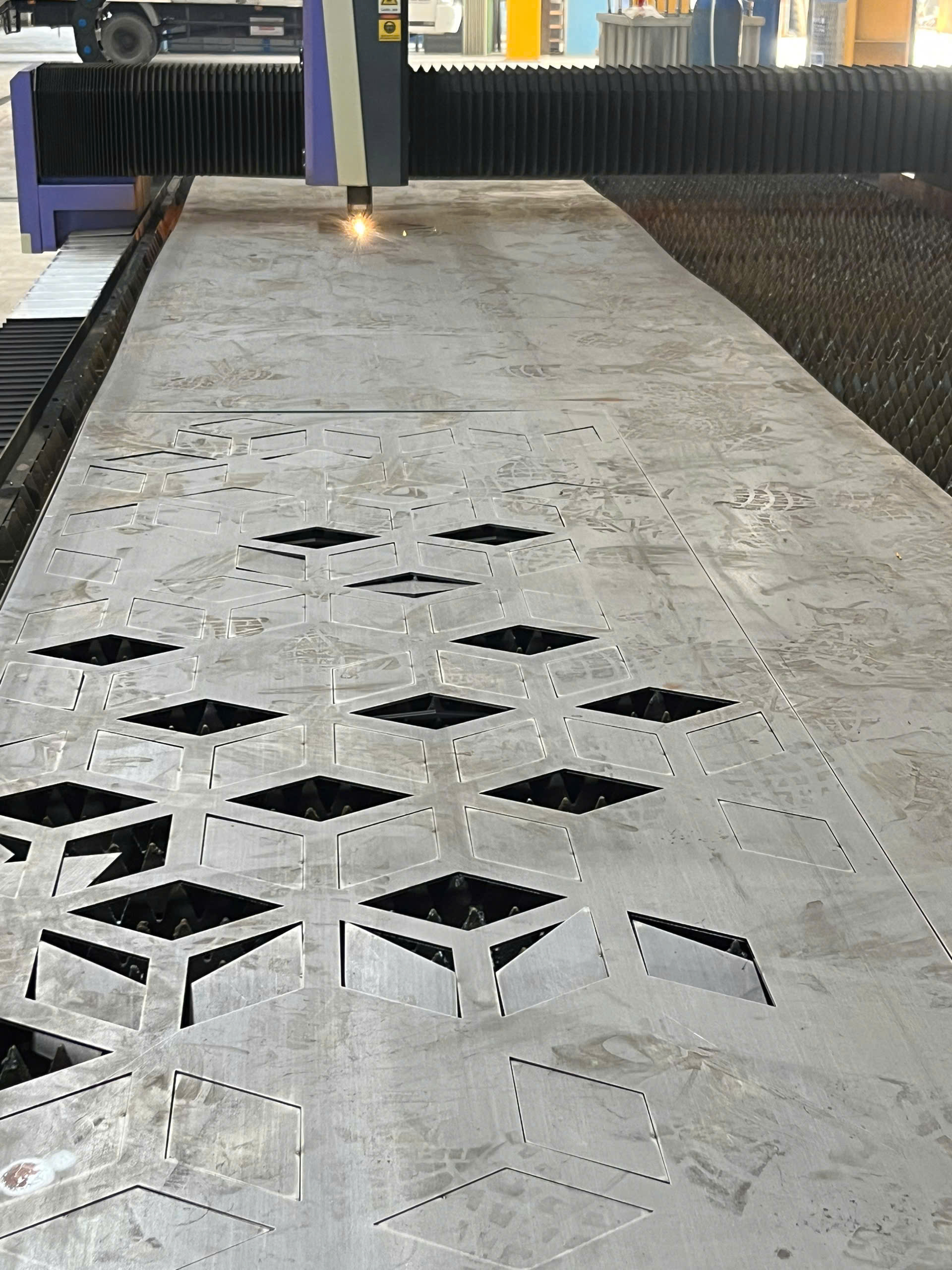
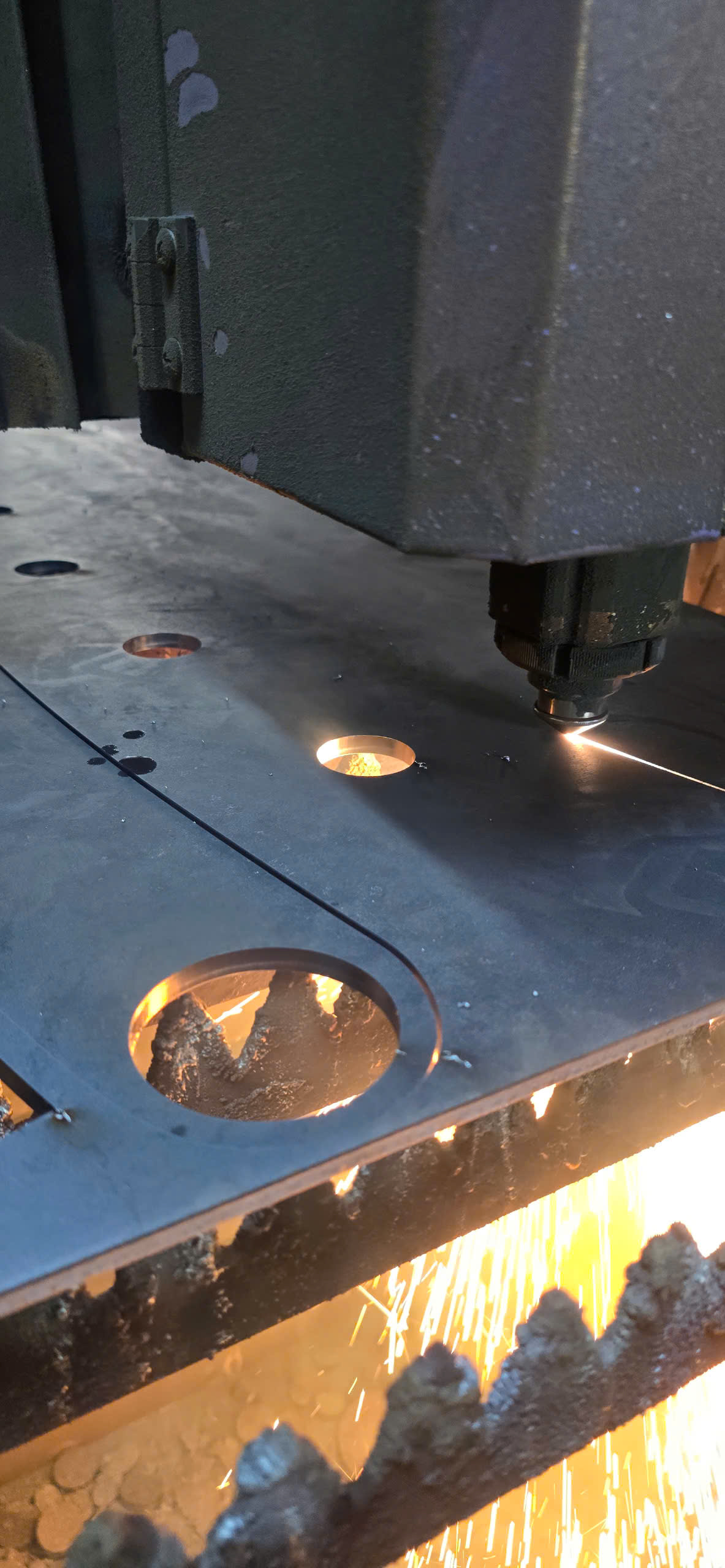
CNC (Computer Numerical Control) cutting technology provides the foundation for precision steel fabrication at PCJ Steel Processing. CNC machines follow programmed cutting paths with repeatability measured in fractions of a millimeter, producing consistent results across entire production runs.
Our CNC capabilities handle complex profile cutting, multi-hole patterns, and tight-tolerance edge work across a range of steel thicknesses and grades.
Controlled Welding for Structural Accuracy
Welding introduces heat that can cause distortion, which is the enemy of precision. PCJ Steel Processing controls welding distortion through documented welding procedures specifying heat input parameters, controlled welding sequences that balance distortion effects, fixture and clamping systems that maintain alignment during welding, and post-weld dimensional verification with corrective action when needed.
Precision Drilling and Threading
Hole patterns and threaded interfaces are critical precision features in many fabricated products. PCJ Steel Processing uses calibrated drilling equipment to achieve accurate hole positions and diameters, with threading operations meeting specified thread classes for proper fastener engagement.
When precision matters, PCJ Steel Processing delivers. Contact our engineering team to discuss your tolerance requirements.
Quality Control in Precision Steel Fabrication
Precision steel fabrication demands quality control processes that match the tight tolerances being targeted. PCJ Steel Processing implements first article measurement verifying initial production units against drawings using calibrated instruments. Statistical process monitoring tracks dimensional measurements across production to detect trends before tolerances are exceeded. Multi-point dimensional verification checks all critical dimensions, not just representative samples. Documentation of measurements creates traceable records linking dimensional data to specific products and production batches.
Our inspection capabilities include digital calipers, micrometers, coordinate measurements, thread gauges, and surface roughness instruments, all maintained under calibration programs.
Materials for Precision Steel Fabrication
Material selection impacts achievable precision. Different steel grades exhibit different machining and fabrication characteristics. PCJ Steel Processing works with carbon steel (SS400, A36, A572, S355, Q235, Q355), stainless steel for corrosion-critical precision applications, and galvanized steel where surface protection is required with precision fabrication.
Material procurement specifications include requirements for flatness, straightness, and surface condition that support achieving tight fabrication tolerances.
Applications of Precision Steel Fabrication
PCJ Steel Processing applies precision fabrication across multiple product categories. Lifting anchors for precast concrete demand precise dimensions for proper load-bearing performance. Rebar couplers require exact thread dimensions for reliable reinforcement connection. Strut fittings need precise hole patterns for universal field installation compatibility. Connection plates require accurate hole patterns and dimensions for structural bolted connections. Custom OEM components demand repeatable precision across production batches.
PCJ Precision Steel Fabrication Process
Our precision fabrication process follows a structured workflow. Engineering review identifies all critical dimensions and tolerances from client drawings. Process planning selects fabrication methods and sequences optimized for achieving required precision. First article production and measurement verifies achievable accuracy before full production. Production execution follows documented procedures with in-process measurements. Final inspection verifies all critical dimensions against specifications. Documentation compiles dimensional records for customer and regulatory requirements.
Request Precision Steel Fabrication from PCJ
PCJ Steel Processing Co., Ltd.
Address: No. 17 Street 9, Van Phuc Urban Area, Hiep Binh Ward, Ho Chi Minh City, Vietnam
Tel: +84 28 3620 1768 | Website: www.pcjsu.com
When your project demands precision, choose PCJ Steel Processing
- Steel Fabrication Sourcing Vietnam | PCJ Steel Processing
- Steel Demand in Indonesia Construction Market: What Exporters and Buyers Should Watch
- Export Process from Vietnam to Australia: A Practical Guide for Fabricated Steel Suppliers
- Precision Steel Fabrication | Achieving Tight Tolerances in Every Product
- PCJ FABRICATION Expands Steel Fabrication with a Sustainable Manufacturing Mindset